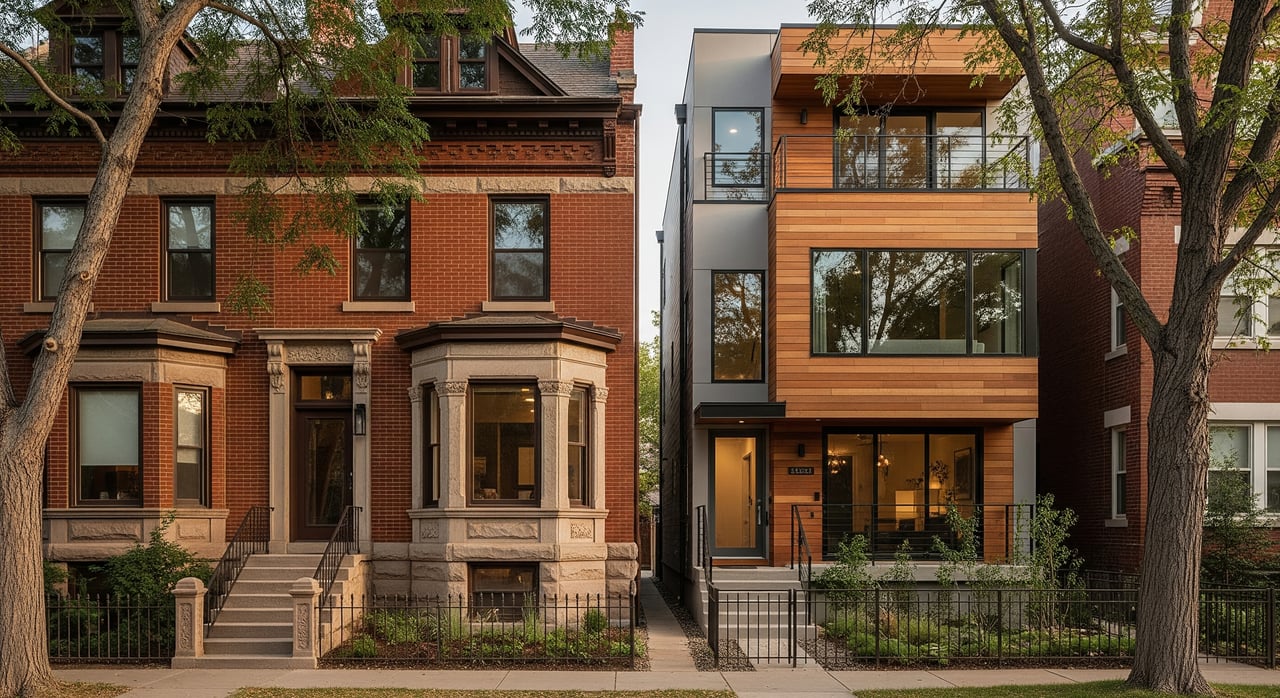
Trying to decide between a rowhome and a townhome in Jefferson Park? You are not alone. The terms often get used interchangeably, which can make it hard to compare homes, costs, and long-term value. In this guide, you will learn how each property type is defined in Denver, how they typically show up in Jefferson Park, and what that means for maintenance, insurance, appraisal, and resale. Let’s dive in.
Rowhome vs townhome: clear definitions
Rowhome and townhome describe attached homes, but they carry different expectations. In Denver, these labels are often descriptive rather than legal classifications, so the recorded documents matter most.
- Rowhome: A continuous row of attached single-family units with shared sidewalls and a uniform façade and roofline. Units often sit on narrow lots with aligned front setbacks and direct street access. Ownership can be fee-simple or condominiumized.
- Townhome: An attached dwelling that may share one or more walls and often belongs to a planned development. Townhomes are usually multi-story with individual entries and sometimes a private garage or small yard. Ownership can be fee-simple, condominium, or part of a planned community HOA.
What truly drives obligations and value is the legal form: fee-simple vs condominium or planned community. Always verify the deed, plat, and governing documents. Party-wall agreements, easements, and covenants define who maintains what and how costs are shared. These items also affect lending and appraisal.
How Jefferson Park homes typically present
Jefferson Park blends older homes with waves of infill development near downtown. Attached homes here often follow a consistent urban pattern: 2 to 3 stories, narrow footprints, and multiple units lined up on a parcel or across contiguous lots.
- Outdoor space: Expect smaller front stoops or porches, balconies, and rooftop decks instead of large backyards. Rear yards are limited or absent on many properties.
- Parking: Alley-access garages are common. Some units rely on on-street parking, while others offer deeded garage spaces or assigned off-street spots.
- Vertical living: Many floor plans stack living areas above ground-floor garages. End units may gain more windows and light.
These patterns shape day-to-day living, monthly costs, and resale appeal. In close-in neighborhoods like Jefferson Park, parking and outdoor space stand out as meaningful differentiators.
Why legal form matters: fee-simple vs condo/HOA
The legal form determines maintenance responsibilities, how rules are enforced, and how lenders and appraisers view your home.
- Fee-simple attached: You own the land and structure. You are typically responsible for exterior walls and the roof unless a recorded agreement shares responsibilities.
- Condominium: You own the interior airspace, while the HOA maintains defined common elements and often the exterior shell. You pay assessments to fund that maintenance.
- Planned community townhouse: Governed by an HOA with rules, budgets, and responsibilities defined in the declaration. Some HOAs handle roofs and landscaping, while others leave more to each owner.
Read the recorded declaration, party-wall agreement, and covenants to understand responsibilities before you write an offer.
Party-wall basics and maintenance
A party wall is a structural wall shared by adjacent owners. Rights and responsibilities are usually recorded and may appear in the party-wall agreement, plat notes, or HOA/condo documents.
Common elements in party-wall agreements include:
- Cost allocation for repairs and replacements
- Access rights to complete work
- Timelines and dispute resolution
- Indemnities and insurance requirements
Water intrusion at shared walls or roof leaks can lead to disputes and special assessments. You should obtain and read these documents during due diligence, then inspect shared elements carefully.
Insurance 101 for attached homes
Insurance follows the legal form and the governing documents.
- Condominiumized homes: The HOA’s master policy typically insures common elements and sometimes the exterior shell. You will likely carry an HO-6 policy for your interiors, finishes, and liability.
- Fee-simple attached or single-family townhomes: You will likely carry an HO-3 or HO-5 policy and insure your structure and lot. Party-wall agreements may specify insurance for shared walls.
Lenders and appraisers need clarity on who insures which parts of the property. Confirm coverage in writing and request the HOA’s insurance certificate if applicable.
Parking and outdoor space: daily life and value
In Jefferson Park, the way you park and the way you live outdoors can change your experience and your resale.
- Parking: Deeded garages or assigned off-street spaces tend to boost utility and buyer interest. Alley-access garages are common, and on-street parking varies by block.
- Outdoor space: Rooftop decks, balconies, and small patios add meaningful livability when large yards are rare. Private or well-designed outdoor areas appeal to buyers and can support stronger resale.
- End units: Additional windows and exposure often command a premium compared to interior units.
These features can offset smaller footprints and drive a better appraisal outcome when comps support the difference.
Appraisal and resale in Jefferson Park
Appraisers aim to compare apples to apples. That means matching the legal form and property type first, then adjusting for features.
- Comparable selection: Fee-simple townhouses are best compared to other fee-simple townhouses. Condos should be compared to condos. Mismatches can skew values.
- Key value drivers: Finished square feet, bed and bath count, garage or deeded parking, outdoor space like a rooftop deck, end-unit exposure, and finish level.
- Market conditions: In fast-moving Denver markets, the most recent sales carry the most weight. Sparse attached-home comps may require adjustments.
- HOA dues: Higher monthly assessments can reduce buyers’ effective monthly budgets. Appraisers note dues and consider marketability.
On resale, clarity helps. Clean documentation, accurate classification, and strong presentations of parking and outdoor amenities support price and speed.
Which is right for you?
Your best fit depends on how you want to live and what you want to maintain.
- Choose a rowhome if you like consistent street presence, direct street access, and the feel of traditional attached living. Verify whether it is fee-simple or condominiumized.
- Choose a townhome if you prefer a planned development feel, potential amenities, and defined HOA rules. Check whether the HOA covers exterior maintenance or if you carry more of it.
- Prioritize features that matter to you: deeded garage parking, rooftop deck, end-unit light, or a small private yard. These details shape both your daily comfort and your exit strategy.
Buyer due diligence checklist
Before you finalize an offer, request and review:
- Deed and recorded plat to confirm legal form and lot lines.
- Survey, if available, to verify party-wall locations and any encroachments.
- Recorded party-wall agreement, easements, and covenants.
- HOA or condo documents: declaration, bylaws, rules, recent minutes, current budget, reserve study, insurance certificate, and any pending special assessments.
- Seller’s property disclosure.
- Special assessment history and any litigation disclosures.
- Evidence of parking rights: garage deed, assigned space documentation, or recorded easement.
- City permit history for additions and roof decks to confirm approved work.
- Title report to check for restrictions and easements.
Also, order a full home inspection that emphasizes roof, shared wall conditions, drainage, and signs of water intrusion. Consider a structural evaluation for older or modified party walls and roof decks. Consult a real estate attorney for complex agreements or covenant questions.
Seller and developer pointers
If you are preparing to sell or launch a collection, plan ahead to help buyers and appraisers understand value.
- Classify correctly: Make sure legal form is clear in the listing and all marketing. Fee-simple attached vs condo matters.
- Package documents: Provide party-wall agreements, HOA budgets and reserves, insurance certificates, and parking deeds or assignments.
- Highlight differentiators: Deeded garage parking, rooftop decks, private outdoor space, end-unit exposure, and quality finishes.
- Be transparent on dues: Note HOA assessments and who maintains what. Buyers will price in monthly carrying costs.
- Track permit history: Have records available for work on decks, additions, or structural changes.
Clarity shortens days on market and supports stronger offers.
The bottom line
Both rowhomes and townhomes work well in Jefferson Park. The difference comes down to legal form, maintenance responsibilities, and livability features like parking and outdoor space. If you focus on the documents, inspect shared elements, and price according to comps that match legal form, you will be set up for a confident purchase or sale.
Ready for a local, design-forward strategy that aligns with your goals in Jefferson Park? Connect with Rachel Gallegos to get access to our private listings and to discuss your next move.
FAQs
What is the key difference between a rowhome and a townhome in Denver?
- Rowhome describes a continuous row of attached homes with shared sidewalls and a uniform façade, while townhome describes attached homes often within a planned development; the legal form is what ultimately sets maintenance and obligations.
How do HOA dues affect affordability in Jefferson Park?
- Higher HOA assessments raise your monthly carrying cost and can influence both buyer demand and appraised value, so you should weigh dues against the services and maintenance they cover.
What should I review about party-wall agreements before buying?
- Obtain the recorded agreement and verify cost sharing, access rights, insurance requirements, and how disputes are handled, then have your inspector evaluate the shared wall and roof conditions.
Do rooftop decks and deeded garages help resale in Jefferson Park?
- Yes, outdoor space and secure off-street parking are meaningful amenities in close-in neighborhoods and often support stronger buyer interest and pricing when comps show similar premiums.
How do appraisers compare fee-simple townhomes versus condos?
- Appraisers seek comparables with the same legal form first, then adjust for features like parking, outdoor space, exposure, and finish level to arrive at a supported value.
What insurance policy do I need for an attached home?
- Condos typically pair an HOA master policy with your HO-6 for interiors, while fee-simple attached or single-family townhomes usually require an HO-3 or HO-5 that covers the structure and lot as defined by your documents.