Casey Cantor spent about a week this summer building a free video game set inside Cheesman Park. It has zombies rising from the old cemetery ground, ghosts that come out at night, and squirrels that chase you across the lawn if you pick up an acorn. It also has Sprout, a real corgi-cattle dog mix who belongs to a friend of Cantor's and appears in the game as the park's unofficial mayor. Players earn points for stopping to pet her. Within hours of launch, other players had doubled Cantor's own high score. Within weeks, they had grown it tenfold.
That a software engineer could turn Cheesman Park into a cult hit without changing a single thing about the park itself is the whole story of this neighborhood right now. Nothing here got bigger this year. A mansion changed hands again. A festival hit its thirteenth year. A parade route moved a few blocks away and the park barely noticed. If you live around the park, the useful thing to understand this season isn't what's new. It's how little "new" ever actually means here, and why that's worth paying attention to.
The Second Life of the Tears McFarlane House
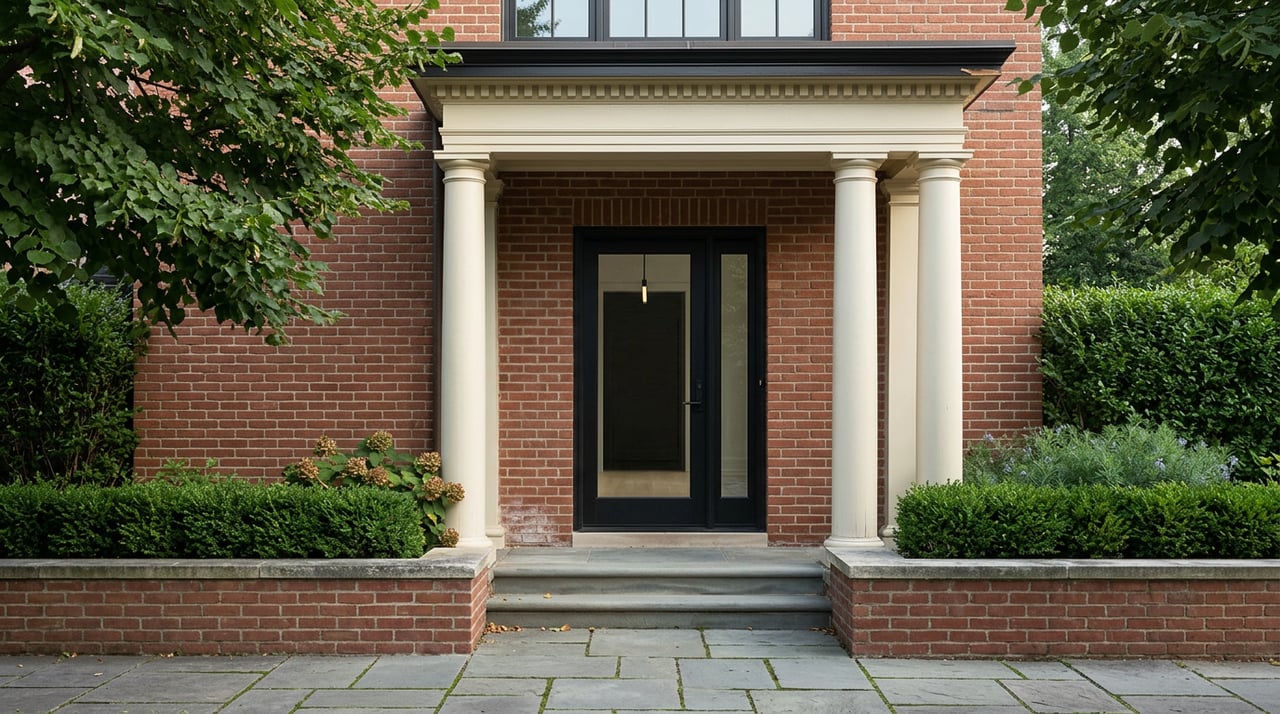
The most concrete change sits at 1290 N. Williams Street, on the park's north edge. That's the Tears McFarlane House, one of the neighborhood's historic mansions, and its ground floor just became a café for at least the second time in two years. The space opened as Secret Garden Bar & Cafe in August 2024, then closed in 2025 amid a dispute between employees, who said the ownership group was union-busting, and the owners, who said the business had simply run out of money. Neither account has been resolved publicly, and the mansion's patio, which opens directly onto the park, sat empty until this reopening.
It reopened at the end of July as The Carriage House, under new ownership: Denver entrepreneur John Goscha, who also founded Personality AI and a handful of other startups, and Jake Riederer, a hospitality veteran with a resume that runs through OPEN Sandwiches, Congress Park Market, Work & Class, and Super Mega Bien. The menu comes from Riederer and Melissa Yanc, a 2025 James Beard semifinalist, and includes a French onion grilled cheese with onion consommé and a North African tuna pan bagnat built on olives, boiled egg, and harissa. Goscha didn't frame this as an outside investment. "I love Cheesman Park and live in the neighborhood," he said of taking over the space.
The rollout is deliberately slow. Phase one, open now, is coffee, pastries, sandwiches, and wine and beer from 8 a.m. to 6 p.m. "We're taking our time with the rollout," Goscha said, and phase two arrives in September: a full cocktail bar, expanded hours to 8 p.m., and an interior redone with marble counters, paneled walls, vintage mirrors, and a checkerboard floor. The building isn't new. The mansion has hosted a cafe under two different names in about two years. What's actually changing is who's running the kitchen, not the address, the patio, or the mansion's relationship to the park it borders.
What Actually Moved This Summer, and What Didn't
Set against that one real estate story, the rest of the season reads less like change and more like maintenance. A short list of what happened, in order:
- The 13th Annual Cheesman Park Art Fest ran July 25 and 26 on the park's south side, off 8th Avenue, the way it has since 2013. Same producer, Dash Events. Same format: 150-plus juried artists, zero commercial booths, food trucks and live music under the same stand of century-old trees.
- The Denver Pride 5K still ran through Cheesman Park on Saturday, June 27, closing the park to vehicle traffic for most of the day. The parade itself, held the next day and historically started at the park, ran differently this year: the Vizzy Denver Pride Parade stepped off from Franklin Street and 17th Avenue instead, ending on Lincoln Street, with PrideFest also moving to 16th Street rather than Civic Center Park.
- On the Cheesman Esplanade, the city-block park south of the main lawn that longtime residents still call Little Cheesman, a nature-themed event called Embodied Dance took over the lawn on July 22.
None of that is a departure from what the park has done for years. It's mostly a recurrence with a date attached. The one item that actually moved, the Pride parade route, moved away from Cheesman, not toward it, which says something about how little pull the park needs to keep its regular fixtures in place.
The Park Doesn't Get Bigger. It Gets Recast.
There's a structural reason the neighborhood keeps producing this pattern of reused buildings and recurring events instead of anything genuinely new. Cheesman Park is listed on the National Register of Historic Places, its 80 acres fixed by a design landscape architect Reinhard Schuetze drew up around 1900 and that S.R. DeBoer completed after Schuetze's death in 1909. Three blocks north, the 1905-built Thompson-Henry Mansion anchors its own protected Humboldt Street Historic District, the kind of designation that takes teardown off the table entirely. The Tears McFarlane House and the rest of the Victorian-era mansions ringing the park are old enough and prominent enough that nobody is proposing to replace them either. When a business here changes hands, it almost always changes inside the same four walls, because redevelopment was never really an option to begin with.
That constraint is exactly what makes the free, recurring calendar the real backbone of daily life around the park, more than any single business ever is. The Cheesman Park Advocacy Group notes that the Colorado Symphony Orchestra and the Denver Municipal Band both play concerts at the pavilion most summers. Slackliners still string up between the trees every Wednesday. Volleyball runs all summer on the central lawn. A few blocks over, the Denver Botanic Gardens' community garden, shared with Congress Park, has been run by the same roughly 140 neighborhood gardeners across 89 plots since it relocated there in 2010, a program that started back in 1977 and has outlasted every cafe that's opened and closed nearby.
Cantor's video game fits this same logic better than anything else this year. He didn't invent a new landmark. He built an entire playable world out of ones that were already there: the volleyball games, the squirrels, a dog everyone already knows by name. "People really love seeing their hometown be represented in fun and unexpected ways," he said of the response. The thing people responded to wasn't a new feature. It was recognition.
Before the Leaves Turn
A few dates worth knowing if you're planning your own late summer around the park. The Carriage House's second phase, full bar and evening hours, is expected in September. Tango on the Rocks, now in its eleventh year, runs September 4 at the Denver Turnverein. The slackliners and volleyball games will likely keep going as long as the weather holds, the way they do most years until the first hard frost pushes everyone indoors.
None of this requires much planning. That's the point. The park's actual offer to the people who live around it was never variety. It was constancy dressed up, every few years, in a new coat of paint.
If Cheesman Park is where you've built a life, or where you're weighing whether one of its historic mansions or park-adjacent homes could be next, Rachel Gallegos works this stretch of central Denver closely enough to know which changes are cosmetic and which ones actually matter. Get Access To Our Private Listings to see what's moving quietly around the park before it's public.