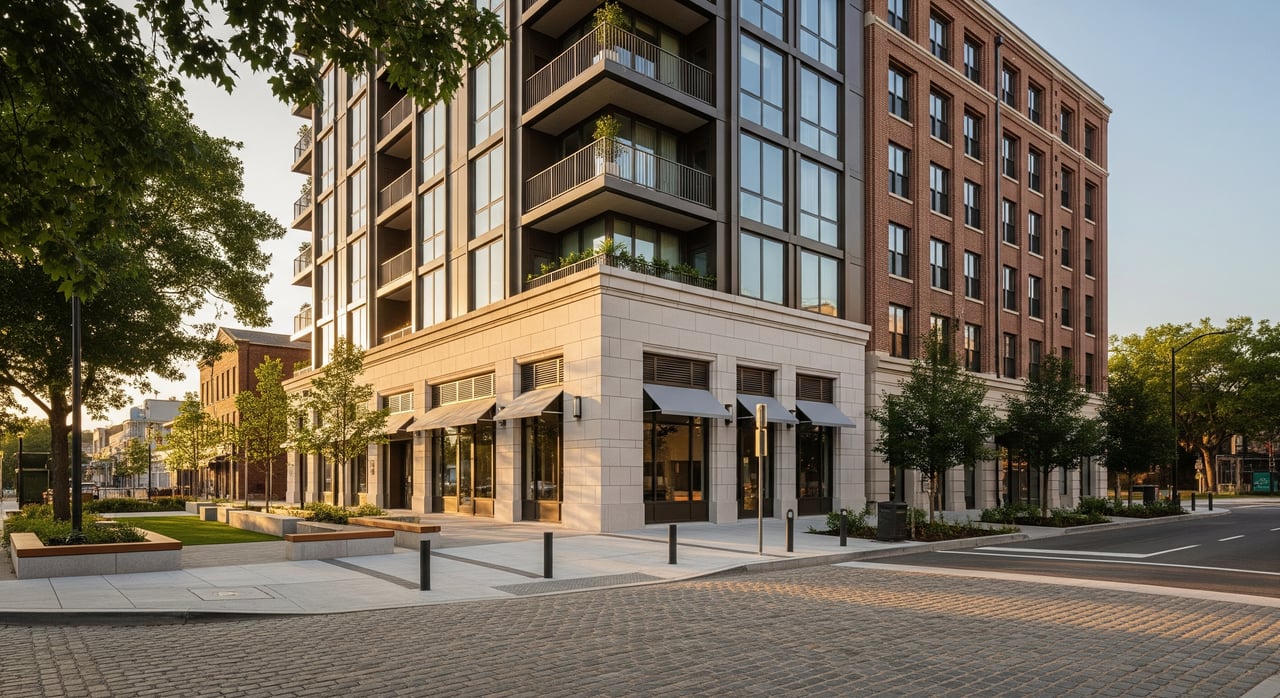
Is the 9th + CO redevelopment a value booster for nearby homes, or will new supply hold prices in place for a while? If you live, plan to buy, or intend to sell near this mixed-use hub, it is a fair question. Big projects can change daily life and reshape pricing over time. In this guide, you will learn how phasing, new-home supply, and retail activation typically influence values, what signals to watch, and how to time your move in a way that fits your goals. Let’s dive in.
9th + CO at a glance: why phasing matters
Think of 9th + CO as a multi-phase, mixed-use plan, not a single building. The sequence of what opens first matters. Residential delivered before retail can create short-term supply pressure with less buzz. Retail and public spaces delivered early can lift walkability and demand faster.
When you evaluate impact, verify the project’s boundaries, allowed uses, and what each phase includes. Pay attention to public infrastructure commitments such as streetscapes, lighting, and open space. These are the everyday features that elevate neighborhood experience and support value over time.
New-home supply and pricing ripple effects
New for-sale homes near 9th + CO expand the pool of comparable properties that appraisers and buyers use. The mix matters. Condos and townhomes attract different buyers than single-family homes, and their price per square foot, HOA fees, and parking policies shape total monthly cost.
Large releases of new homes can increase nearby inventory in the short term. If absorption slows, sellers of existing homes may feel pressure to sharpen pricing or improve presentation. Over the medium term, well-designed, higher-amenity new product can attract higher-income buyers, which can support prices for nearby homes with similar quality and convenience.
What to ask before you price or purchase:
- What product types are coming to market now versus later phases?
- How are units being released: small pre-sale tranches or big drop-all-at-once deliveries?
- Are there incentives, rate buydowns, or HOA fee holidays on initial releases?
- What are typical HOA fees and parking costs, and how do they compare to nearby resales?
- How many bedrooms dominate the mix, and who is the likely buyer pool?
Retail activation, amenities, and walkability
Walkable retail and services are powerful demand drivers. Grocery, everyday conveniences, and quality dining keep foot traffic steady and make car-light living realistic. Plazas, bike lanes, and small parks build a sense of place and encourage residents to stay longer.
Impact depends on execution. High pre-leasing to creditworthy tenants and visible early openings signal durability. Persistent retail vacancy after delivery can hold back enthusiasm. Lighting, wayfinding, and safe access influence whether people truly use the space day and night.
Signals worth tracking:
- Which anchors have been publicly confirmed and the pace of openings
- The amount of retail space delivered relative to what is planned
- Early occupancy rates and tenant stability over the first few quarters
- Pedestrian activity and how often you see storefronts in use
How values usually respond nearby
Mixed-use redevelopments often support appreciation over a 3 to 7 year horizon, especially where walkability and daily convenience improve from a low base. The strongest pricing effects tend to occur within about a half-mile, then gradually fade with distance. Natural barriers like wide corridors or industrial edges can limit spillover.
In the near term, new-home deliveries can boost inventory and temper price growth until demand catches up. Some buyers who might have chosen older nearby homes may opt for new construction instead, which can reduce demand for entry-level existing inventory. At the same time, larger lots, mature landscaping, or unique architecture in nearby resales can retain a premium when buyers compare lifestyle and space.
Read the market: stability vs. risk
Signals of stability or likely appreciation:
- Strong pre-leasing for retail anchors with multi-year terms
- Healthy pre-sales for for-sale phases without heavy incentives
- On-time completion of public infrastructure and open spaces
- Low early retail vacancy and rising foot traffic
- Steady absorption of new homes with normal days on market
Signals of near-term downside pressure:
- Large releases of for-sale units with weak pre-sales
- High storefront vacancy or early tenant turnover
- Significant price cuts or extended incentives on new homes
- Delays to promised streetscape or park improvements
- Broader market weakness coinciding with sizable new supply
Buyer playbook near 9th + CO
If you are considering a new home in or near the project, underwrite the total monthly carry, not just list price. HOA fees, parking, and any special assessments all matter. Ask what amenities and retail openings are guaranteed during your phase’s delivery and what is still to come.
Buying earlier can secure a lower basis if the area’s promise plays out, but you may live with construction and incomplete amenities. Buying later reduces uncertainty and adds walk-and-feel confidence, though you might pay a premium. Either approach benefits from a plan for how long you intend to stay and a clear sense of tradeoffs.
Buyer checklist:
- Confirm what is included in the base price versus optional upgrades
- Review HOA budgets, reserve studies if available, and parking policies
- Compare price per square foot to nearby resales, adjusted for condition and outdoor space
- Ask about builder warranty coverage and timelines for amenity delivery
- Assess noise, access, and construction staging for the next 12 to 24 months
Owner and seller strategy if you live nearby
If you plan to sell while a new-home tranche is releasing, assume increased competition. Presentation, pricing precision, and timing can make the difference. Lean into what new construction cannot offer, such as larger private yards, mature trees, distinctive architecture, or custom finishes.
If you plan to hold, track progress on retail openings and public improvements. These are the amenities that support a lifestyle premium. Consider targeted upgrades that enhance livability and design, then leverage concierge-style preparation to maximize market impact when you do choose to sell.
Seller checklist:
- Monitor new-release calendars to avoid competing with large drops
- Price with the most relevant comps, weighting similar product types first
- Elevate design presentation to meet buyer expectations shaped by new builds
- Use pre-market outreach to match with qualified buyers who value your home’s unique features
- If timing is flexible, list into periods of low competing inventory
Micro-market metrics to watch
To separate project-specific effects from broader market moves, compare what is happening within a defined radius to nearby control areas with similar baseline trends. Focus on:
- Median sale price and price per square foot over 12 to 36 months
- New listing counts, active inventory, and months of supply
- Days on market and sale-to-list ratio for both new and resale properties
- Absorption rates for new phases and whether pricing holds without heavy incentives
- Retail occupancy and visible foot traffic as the district opens
Timing your move around phases
Your timing decision should reflect where the project sits on the curve: pre-activation, activation, or mature. Early in the cycle, uncertainty is higher and pricing can be more negotiable. During activation, demand often rises as amenities come online and marketing ramps up. In maturity, the story is proven and price discovery stabilizes.
If you are flexible, align your plans with a milestone that will materially improve daily life, such as the opening of an anchor grocer or the completion of key streetscapes. That alignment can support stronger resale positioning later and improve quality of life from day one.
Plan with a development-savvy advisor
You do not need perfect information to make a smart move. You need the right framework and local verification at the right moments. A development-informed approach will help you read release strategies, parse incentives, and separate short-term noise from long-term value signals.
If you are weighing a purchase or sale near 9th + CO, let us help you define a plan, benchmark the comps, and time your decision with confidence. Connect with Rachel Gallegos for a calm, strategic path forward.
FAQs
Will 9th + CO make my nearby home worth more?
- Over the medium term, mixed-use redevelopments often support appreciation if retail and public spaces activate as planned, though short-term new supply can temper price gains until demand absorbs it.
How far from 9th + CO does the pricing impact reach?
- Effects are typically strongest within about a half-mile and fade with distance, with barriers like wide corridors or industrial edges reducing spillover.
Are new-construction prices a good guide for my resale?
- Use them as directional data, but prioritize comps with similar product type and features; adjust for lot size, outdoor space, condition, and HOA or parking costs.
Should I buy now or wait for later phases near 9th + CO?
- Buying earlier can offer a lower basis but includes construction and amenity risk; buying later reduces uncertainty but may cost more once activation proves demand.
What early warning signs suggest values could soften?
- Watch for large new releases with weak pre-sales, high retail vacancy or tenant turnover, sizable price cuts or incentives, delayed public improvements, and broader market slowdowns.