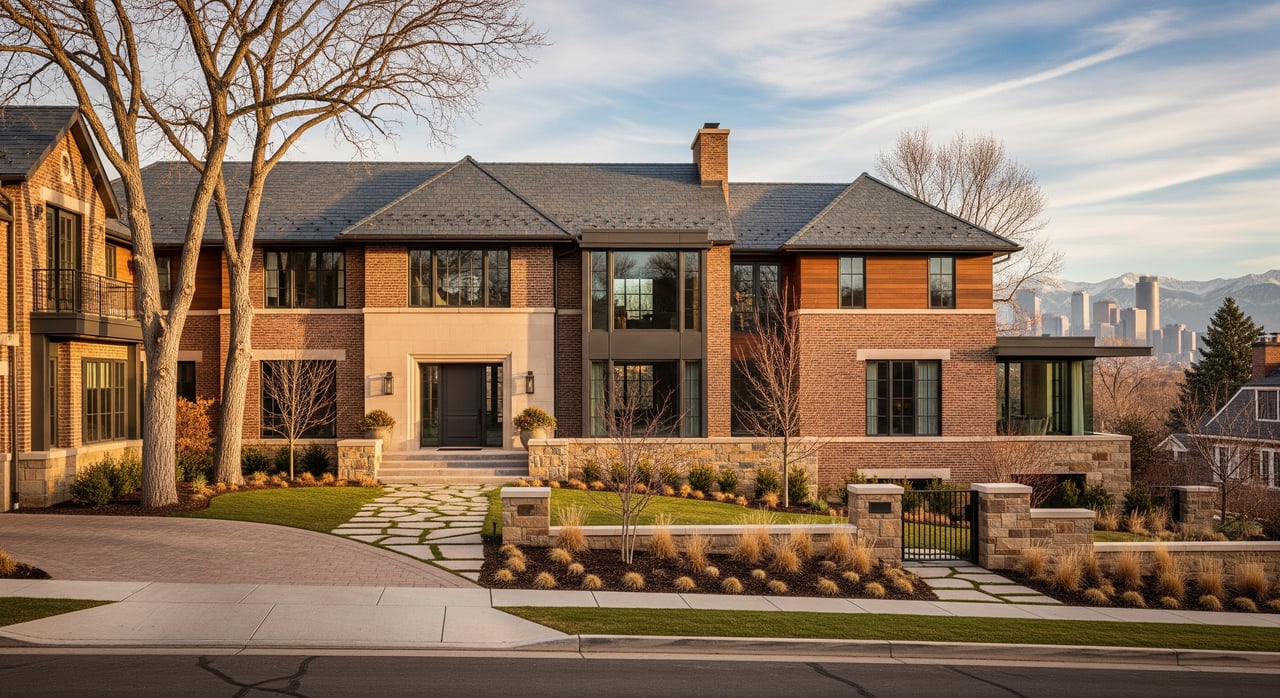
Ever scroll past a Hilltop listing because you were unsure what the style really means for daily life and long‑term value? You are not alone. In this neighborhood, Mediterranean charm, mid‑century ease, expanded Tudors, and sleek contemporary infill homes often sit on the same block. In this guide, you’ll learn how each style lives, what to watch for in renovations, and how to evaluate quality before you write an offer. Let’s dive in.
Hilltop at a glance
Hilltop is an established, mostly single‑family area east of central Denver with larger lots for the city and mature trees. You will see early 20th‑century bungalows and Tudors, mid‑century ranches from the 1950s and 1960s, and a steady wave of tear‑downs and new infill from the 1990s to today. Because zoning governs setbacks, height, and lot coverage, confirm the allowable building envelope with Denver Community Planning & Development before assuming you can add on or build an ADU.
Denver’s semi‑arid climate brings big temperature swings, low humidity, strong UV, and seasonal snow and hail. Freeze‑thaw cycles can stress foundations and stucco. Hail and UV exposure can shorten roof and exterior finish life, so confirm roof age and any recent storm claims. Most homes have basements, which makes drainage, grading, and gutter performance important. Radon potential is moderate to high in many Front Range areas, so plan to test and confirm mitigation options during inspection.
Mediterranean homes
How to identify
- Stucco exteriors with arched openings and lower eave overhangs.
- Low to medium roof pitches, sometimes with clay or concrete tiles.
- Wrought‑iron details and occasional courtyards or small patios.
Livability notes
- Original plans are often more compartmentalized, which can suit formal spaces.
- Courtyards and patios support easy indoor‑outdoor living.
- Lower overhangs offer less wall and window protection from sun and precipitation.
Maintenance to watch
- Stucco needs careful inspection for cracks, delamination, and past patching.
- Tile roofs are durable but only with proper underlayment, flashing, and snow management.
- Older single‑pane windows affect comfort; efficiency upgrades should balance character.
Renovation cues
- Look for continuous, well‑executed flashing at roof‑wall intersections, chimneys, and openings.
- Verify tile installation details, including underlayment quality and snow guards where needed.
- Probe suspicious stucco patches; large or mismatched areas may signal moisture issues.
Mid‑century ranch
How to identify
- Single‑story profiles with low‑pitched or low‑slope roofs and wide eaves.
- Horizontal emphasis, attached garages, and large picture windows.
- Brick veneer or wood siding and simple lines.
Livability notes
- True single‑level living with easy flow can be a major advantage.
- Later examples lean open plan, with good connection to patios and yards.
- Large windows support daylight, though original glazing is often single pane.
Maintenance to watch
- Original HVAC, insulation, and electrical systems may be undersized or outdated.
- Low‑slope roofs and broad eaves need strong drainage details.
- Poor insulation and original windows can make temperature control challenging.
Renovation cues
- Confirm any open‑plan conversions used engineered beams and received permits.
- Check for knob‑and‑tube or aluminum wiring and an undersized electrical service.
- Inspect roof flashing and tie‑in details where additions meet the original roof.
Expanded Tudors
How to identify
- Steep gables, brick and stucco with half‑timber accents, tall narrow windows.
- Decorative chimneys and cottage‑scale original footprints.
- Many Hilltop Tudor cottages have thoughtful additions or second stories.
Livability notes
- Originals feel cozy and compartmentalized; expansions can add primary suites and modern kitchens.
- Well‑done additions blend period exterior motifs with updated interiors.
- Interior level changes may remain where old and new meet.
Maintenance to watch
- Additions must be structurally tied to the original home to avoid cracks and moisture issues.
- Masonry and chimneys need routine maintenance, including mortar and flashing.
- Applied half‑timber details can look inauthentic if not executed carefully.
Renovation cues
- Inspect junctions of old and new walls and foundations for cracking or settlement.
- Verify permits and, if applicable, any local preservation rules that could affect future work.
- Check floor transitions and confirm new foundations were properly installed under additions.
Contemporary infill
How to identify
- Larger footprints with modern massing, flat or low‑pitched roofs, and expansive glazing.
- Open plans, high ceilings, modern kitchens and baths, and upgraded systems.
- Claddings may include stucco, fiber cement, metal, engineered wood, and modern masonry.
Livability notes
- Light, volume, and modern amenities are central to the experience.
- Designs typically support efficient HVAC and updated energy standards.
- Layouts often prioritize large suites and flexible living spaces.
Maintenance to watch
- Quality varies from luxury custom builds to value‑engineered infill.
- Water management is critical with modern cladding systems and deep glazing.
- Neighborhood fit can influence resale if massing feels out of scale for the block.
Renovation or new‑build cues
Confirm all permits, final inspections, and certificate of occupancy.
For EIFS or fiber cement, verify proper substrates, flashings, and drainage planes.
Ask about glazing performance, solar heat gain, and shading strategies for Denver sun.
Style and livability tradeoffs
- Floor plan: Ranches favor single‑level ease. Mediterranean and Tudor plans skew more compartmentalized unless reworked. Contemporary infill maximizes open layouts.
- Daylight: Mid‑century and modern homes lean into large windows. Older period styles often have smaller, vertical openings.
- Maintenance: Stucco, tile, and detailed masonry need specialized care. Newer builds may reduce near‑term maintenance, but long‑term durability still depends on detailing and workmanship.
Renovation quality checklist
Use this quick reference during showings and inspections:
- Structural: foundation cracks, settlement patterns, and engineered drawings for major openings or additions.
- Water management: roof age and condition, flashing quality, gutters and downspouts, grading away from the foundation, basement moisture history, sump pumps and discharge routing.
- Exterior cladding: stucco or EIFS condition, brick mortar joints, wood trim paint, and flashing around windows and doors.
- Windows and doors: smooth operation, condensation signs, sill pans and head flashings, single vs double pane.
- Mechanicals: furnace, AC, water heater ages; electrical panel capacity and wiring type; plumbing materials and visible corrosion.
- Insulation and ventilation: attic levels, vapor barriers, attic venting, ductwork condition.
- Code and permits: verify permits for additions, structural changes, roofing, electrical, and plumbing.
- Environmental: radon testing and mitigation readiness; possible asbestos or lead in older homes; any visible mold.
- Site and landscaping: tree root impacts, retaining walls, alley or driveway drainage.
Style‑specific red flags
- Mediterranean: layered stucco patches without investigation, missing or poor flashing under tile, and lack of snow guards where needed.
- Mid‑century ranch: unengineered open‑plan cuts, low‑slope roofs with multiple past repairs, and old or undersized electrical services.
- Expanded Tudors: cracks where additions tie to originals, mismatched roof pitches, and superficial half‑timbering.
- Contemporary infill: thin wall assemblies behind modern cladding, weak drainage planning, and insufficient mechanical ventilation in tight envelopes.
Due diligence in Hilltop
Ask these questions early:
- Were additions or major remodels permitted and finalized? Can you see permit numbers and warranties?
- Ages of furnace, AC, water heater, roof, and electrical panel?
- Any history of basement water intrusion, foundation work, or storm claims?
- Has the roof been replaced after hail events? If yes, when and with what materials?
- Any easements, alley access constraints, or zoning limits that affect future expansion?
Include these contingencies:
- Full home inspection, with follow‑ups by a structural engineer, roofing contractor, or EIFS/stucco specialist as needed.
- Sewer scope and radon test.
- Proof of final inspections and certificate of occupancy for major remodels.
- For older homes, request lead and asbestos disclosures and consider testing if you plan renovations.
Tap local records:
- Denver Community Planning & Development for zoning, permits, and buildability.
- Denver County Assessor for property history and improvements.
- Denver Landmark Preservation for any designations or overlays.
- Local MLS data for comps and market context.
- EPA and Colorado Department of Public Health for radon guidance.
How to compare two homes
- Start with layout: decide if single‑level living or a multi‑level plan fits your daily routine.
- Weigh envelope and systems: newer systems and solid water management reduce near‑term costs.
- Confirm authenticity: quality period details or well‑integrated additions often command stronger resale.
- Check permits: documented, permitted work builds confidence and can smooth financing and insurance.
A thoughtful match of style, layout, and build quality can deliver comfort today and value tomorrow. If you want a second set of eyes on a Hilltop listing or need help reading a renovation, connect with Rachel Gallegos for calm, design‑savvy guidance and access to private opportunities.
FAQs
What defines Mediterranean homes in Hilltop?
- Stucco exteriors, arched openings, and sometimes clay or concrete tile roofs with courtyards or patios; inspect stucco and roof flashing closely.
Are mid‑century ranches good for aging in place?
- Yes, single‑level living and wide openings help, but plan for upgrades to HVAC, insulation, electrical, and window performance.
What should I check on an expanded Tudor in Hilltop?
- Look at the tie‑in between old and new structures, masonry and chimney maintenance, and whether additions were permitted and engineered.
How do contemporary infill homes hold value in Hilltop?
- Resale depends on quality, detailing, and neighborhood fit; verified permits and strong water management support long‑term value.
How does Denver’s climate affect maintenance in Hilltop?
- Freeze‑thaw stresses foundations and stucco, hail can damage roofs and siding, and strong UV accelerates finish wear; roof age and drainage matter.
Do I need radon testing for Hilltop homes?
- Yes, radon potential is moderate to high in many Front Range areas, so include a radon test and confirm mitigation options during inspection.